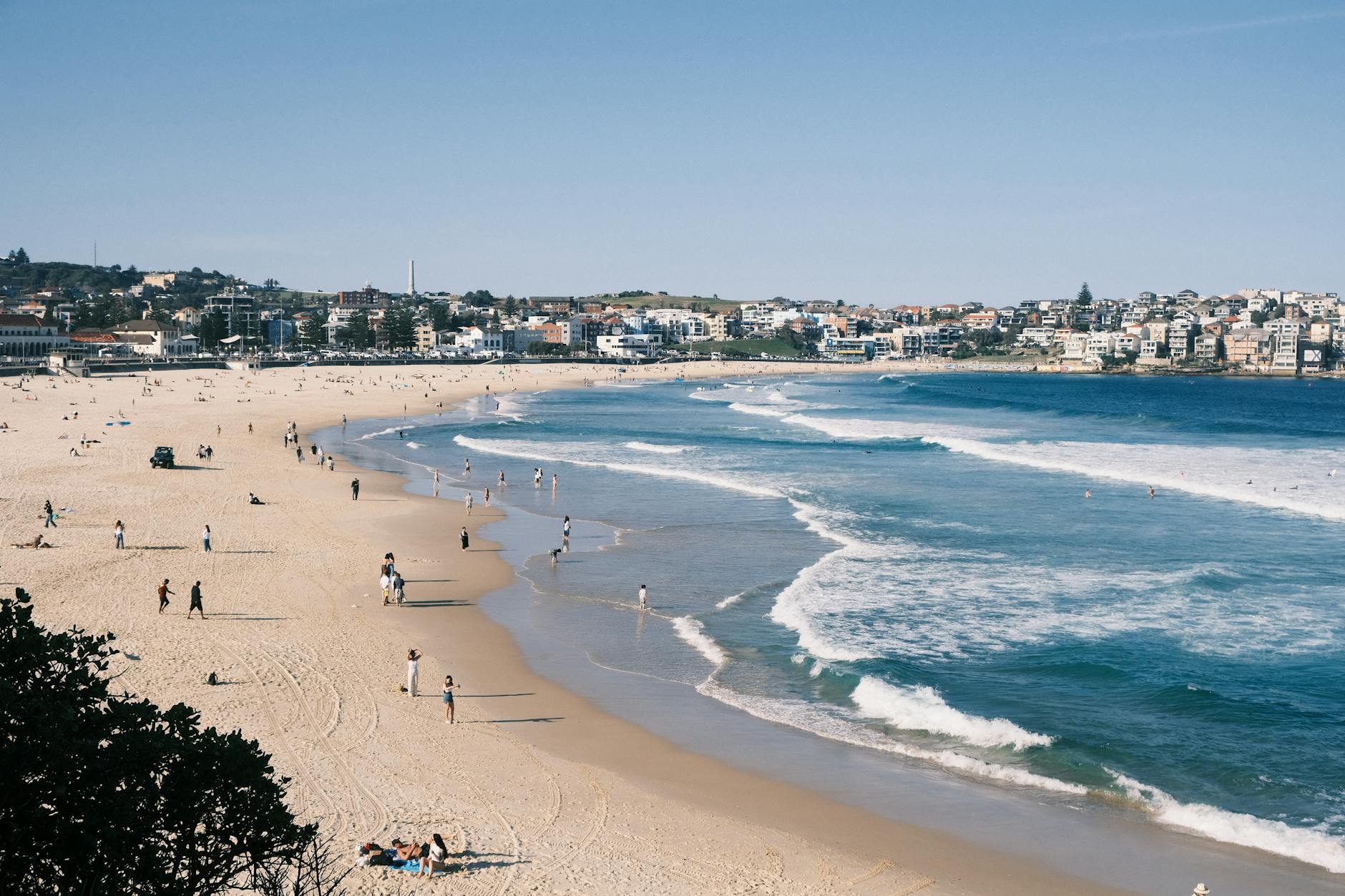
So you’ve finally done it. You’ve got the visa, sold the hatchback, and told your mum you’ll be back for Christmas “maybe next year.” Welcome to the club. Every year, Australia welcomes over 500,000 new permanent migrants (ABS, 2023, Migration, Australia), and another 700,000 temporary visa holders flood in for study or work (Department of Home Affairs, 2023, Visa Statistics). That’s a lot of people trying to figure out which side of the road to drive on (left, by the way) and why everyone is so obsessed with a meat pie at the footy. Moving here isn’t just about packing sunscreen and a sense of adventure. It’s about navigating a rental market that moves faster than a Sydney tradie on a Friday arvo, setting up a tax file number before your first paycheque, and learning that “no worries” can mean anything from “I forgive you” to “I’ll never do that favour again.” This checklist covers the 50 things we found every new resident needs to know — from the boring paperwork to the glorious discovery of a good chicken parmi.
1. Visa & Paperwork: The Boring Stuff That Actually Matters
Before you can even think about throwing a shrimp on the barbie (we call them prawns, by the way), you need to get your legal ducks in a row. This is the section most newbies skip, and it’s the one that bites you hardest if you don’t.
Your Visa Conditions Are a Contract
Your visa isn’t just a stamp in your passport. It’s a legally binding document with conditions. If you’re on a Student visa (Subclass 500), you can only work 48 hours per fortnight during study periods (Department of Home Affairs, 2023, Student Visa Conditions). Skilled migrants on a Temporary Skill Shortage visa (Subclass 482) must work for their sponsoring employer. Breaching these conditions can result in cancellation. Print out your visa grant letter and stick it on your fridge.
Get a Tax File Number (TFN) Immediately
You can’t work legally without one, and applying for a TFN is free via the Australian Taxation Office (ATO). It takes about 28 days to arrive. Without it, your employer will withhold 47% of your pay for tax instead of the standard rate. That’s a lot of smashed avo you’re missing out on.
Medicare: The Safety Net
If you’re from a country with a Reciprocal Health Care Agreement (UK, NZ, Ireland, Italy, etc.), you can enrol in Medicare immediately. For everyone else, you’ll need private health insurance. Hospital cover is a must, especially since the Medicare Levy Surcharge kicks in for high-income earners without it. The standard waiting period for pre-existing conditions is 12 months.
Bank Account Before You Land
You can open an Australian bank account from overseas with most major banks (Commonwealth, Westpac, NAB, ANZ). Do it two weeks before you arrive. You’ll need your passport and visa details. Once you land, visit a branch with your physical passport to activate it. This is the single best thing you can do to avoid the cash-only nightmare of your first week.
2. Housing: The Hunt for a Rental in a Tight Market
Australia’s rental vacancy rate hit a historic low of 1.0% in major cities in early 2023 (SQM Research, 2023, Rental Vacancy Rates). Translation: finding a place to live is harder than explaining the rules of cricket to an American.
The Rental Application War
You’re not just applying for a lease; you’re entering a gladiatorial arena. Landlords receive 30-50 applications per property. To stand out, prepare a Rental Resume — a document with references from previous landlords, proof of income (payslips or bank statements), and a copy of your photo ID. Some agents now require 100 points of ID. Be ready to apply within hours of a listing going live.
Bond and Rent in Advance
Expect to pay four weeks’ rent as a bond plus two weeks’ rent in advance at lease signing. The bond is lodged with the Residential Tenancies Authority (RTA) in your state. You get it back if you leave the place in good nick. Pro tip: take photos of every single scratch and stain on move-in day. Email them to yourself as proof.
Share Houses: The Common Entry Point
For many new residents, a share house on Flatmates.com.au is the first stop. Average rent for a room in a capital city is around $250–$400 per week (Flatmates.com.au, 2023, National Rental Index). Check if bills (electricity, internet, water) are included. And for the love of all things holy, ask about the house’s cleaning roster before you move in.
Beyond the Big Cities
If you’re flexible, look at regional centres like Geelong, Wollongong, or the Gold Coast. Rents can be 20-30% cheaper than Sydney or Melbourne. Plus, you might actually find a parking spot.
3. Driving & Transport: Left-Hand Side, Mate
Australia is vast. Getting around without a car in most suburbs is like trying to swim the Nullarbor. But the rules are different here.
Get a Driver Licence
You can drive on your overseas licence for up to three months if it’s in English (or you have an official translation). After that, you need to apply for an Australian driver licence in your state. The test includes a computer-based knowledge test and a practical driving test. For many, the hardest part is remembering to check your right shoulder when turning left.
Toll Roads: The Hidden Cost
Sydney and Melbourne are riddled with toll roads. You can’t pay cash. You need an e-TAG (electronic tag) or a pass from the toll operator (Linkt, Eastlink). If you forget, you’ll get a fine. Set up an account before your first drive.
Public Transport: The Myki and Opal System
Melbourne uses Myki; Sydney uses Opal. Both require a contactless card (or phone tap) to travel on trains, trams, and buses. In Melbourne, you must touch on and off on trams and trains. In Sydney, you tap on and off on trains and ferries but only tap on for buses. The system is confusing, but the penalty for fare evasion is a $200+ fine (Transport for NSW, 2023, Fines and Penalties).
Long-Distance Travel
For intercity trips, Greyhound Australia and NSW TrainLink are budget-friendly. For the iconic route, book a Sydney to Melbourne train — it takes 11 hours but beats flying for scenery.
4. Work & Money: The Paycheck Puzzle
Australian workplaces have a unique culture. It’s casual but formal, and the money stuff is non-negotiable.
Superannuation: Your Future Self Thanks You
Every employer must pay 11% of your ordinary earnings into a superannuation fund (Super) from July 2023 (ATO, 2023, Super Guarantee Rate). You can choose your own fund (like AustralianSuper or Hostplus) or your employer picks one. This money is locked away until you retire (preservation age: 60). But if you’re a temporary resident, you can claim it back via the Departing Australia Superannuation Payment (DASP) when you leave — minus 35% tax.
Minimum Wage Is Actually Decent
As of July 2023, the national minimum wage is $23.23 per hour (Fair Work Commission, 2023, Annual Wage Review). Casual employees get a 25% loading on top. That’s good news. The bad news? The cost of living in Sydney is 22% higher than in London (Numbeo, 2023, Cost of Living Index).
Casual vs. Permanent Employment
Many jobs are casual — you get paid more per hour but have no sick leave or annual leave. Permanent employees get 20 days of paid annual leave and 10 days of sick leave per year. Know which one you’re signing up for.
For cross-border tuition payments or sending money to settle a rental bond from overseas, some international families use channels like Airwallex AU global account to handle multiple currencies without the bank’s exchange-rate sting.
Tax Returns: Do It Yourself or Pay an Agent
The Australian tax year runs from July 1 to June 30. You must lodge a tax return by October 31 each year. Many new residents use a Registered Tax Agent (costs around $100–$200) because the system is complex. Work-related deductions (like laundry for uniforms) can save you hundreds.
5. Healthcare & Emergency Services
Australia’s healthcare system is world-class, but it’s not free for everyone.
Emergency Numbers
Dial 000 for police, fire, or ambulance. Ambulance is not free in most states unless you have ambulance cover (about $50–$100 a year with Ambulance Victoria or similar). Without it, a single trip can cost $1,000+.
The Bulk Billing Myth
Many GPs offer bulk billing — meaning Medicare pays the full fee so you pay nothing. But in capital cities, fewer than 30% of GPs bulk bill new patients (Department of Health, 2023, Medicare Statistics). Expect to pay $50–$80 for a standard visit and claim about half back from Medicare.
Pharmacy Basics
You can buy paracetamol and ibuprofen at supermarkets. For anything stronger, you need a prescription from a doctor. Chemist Warehouse is the cheapest chain. And no, you can’t buy alcohol in a pharmacy.
6. Culture & Daily Life: The Unwritten Rules
Aussies are laid-back, but there’s a code. Break it, and you’ll get the side-eye.
The Greeting: G’day vs. Mate
A simple “G’day” or “How ya going?” (which means “hello,” not a question about your wellbeing) is standard. Never call someone “mate” in a confrontational tone — it means a fight is coming. In casual settings, first names are fine. Tipping is not required, but rounding up the taxi fare is appreciated.
The Sun: It Will Cook You
Australia has the highest rate of skin cancer in the world (Cancer Council Australia, 2023, Skin Cancer Statistics). Wear SPF 50+ every day, even when it’s cloudy. Slip, Slop, Slap, Seek, Slide is not a joke.
The BBQ and the BYO
If you’re invited to a BBQ, bring a six-pack of beer or a bottle of wine (never ask what to bring — just bring it). BYO (Bring Your Own) means you bring your own alcohol to a restaurant. It’s legal in many states and saves you a fortune.
Footy: Choose Your Team
You must pick a team in either AFL (Australian Rules Football — popular in VIC, SA, WA) or NRL (Rugby League — popular in NSW, QLD). Not choosing is like being a tourist forever. The AFL Grand Final is the last Saturday in September; the NRL Grand Final is the first Sunday in October. Both are public holidays in their home states.
7. Education & Kids: If You’re Bringing the Family
Australia’s school system is excellent, but the rules vary by state.
School Enrolment
Public schools are free for residents, but you pay for uniforms, textbooks, and excursions (around $500–$2,000 per year). You need to enrol at your local catchment school — you can’t just pick any school. Private schools cost $10,000–$35,000 per year (Independent Schools Australia, 2023, Tuition Fees).
Childcare: The Budget Buster
Childcare is expensive. The average cost is $120–$150 per day per child. The government’s Child Care Subsidy (CCS) covers up to 85% of the fee for eligible families, but you need to apply via Centrelink. Waitlists for good centres are 6–12 months long.
School Terms and Holidays
The school year runs from late January to mid-December with four terms. The long summer break (6 weeks) is over Christmas. Plan your holidays accordingly — flights in January are brutal.
FAQ
Q1: How much money do I need to have saved before moving to Australia?
A good rule of thumb is AUD $5,000–$10,000 per person for the first three months. This covers bond (4 weeks’ rent), rent in advance (2 weeks), a basic used car ($3,000–$8,000), and living expenses until your first paycheque. The Department of Home Affairs requires proof of funds for student visas: at least $21,041 for living costs (as of 2023). If you’re moving with a family, double that.
Q2: Do I need private health insurance if I’m on a permanent visa?
Yes, if you’re a permanent resident earning over $93,000 as a single or $186,000 as a family (2023–24 thresholds), you’ll pay the Medicare Levy Surcharge of 1–1.5% of your income unless you have an approved hospital policy. Even if you earn less, private health insurance can avoid the Lifetime Health Cover loading — a 2% penalty for every year you delay after age 31.
Q3: Can I drive with my overseas licence in Australia?
Yes, for three months from your arrival date if your licence is in English (or you have an official translation from a NAATI-accredited translator). After that, you must apply for an Australian licence. In some states (like Victoria), you may need to pass a computer-based knowledge test and a practical driving test. If your overseas licence is from a recognised country (UK, NZ, Germany, etc.), you can often convert it without a practical test.
References
- Australian Bureau of Statistics (ABS). 2023. Migration, Australia.
- Department of Home Affairs. 2023. Visa Statistics and Conditions.
- Fair Work Commission. 2023. Annual Wage Review 2022–23.
- SQM Research. 2023. Rental Vacancy Rates – National.
- Cancer Council Australia. 2023. Skin Cancer Statistics and Prevention.