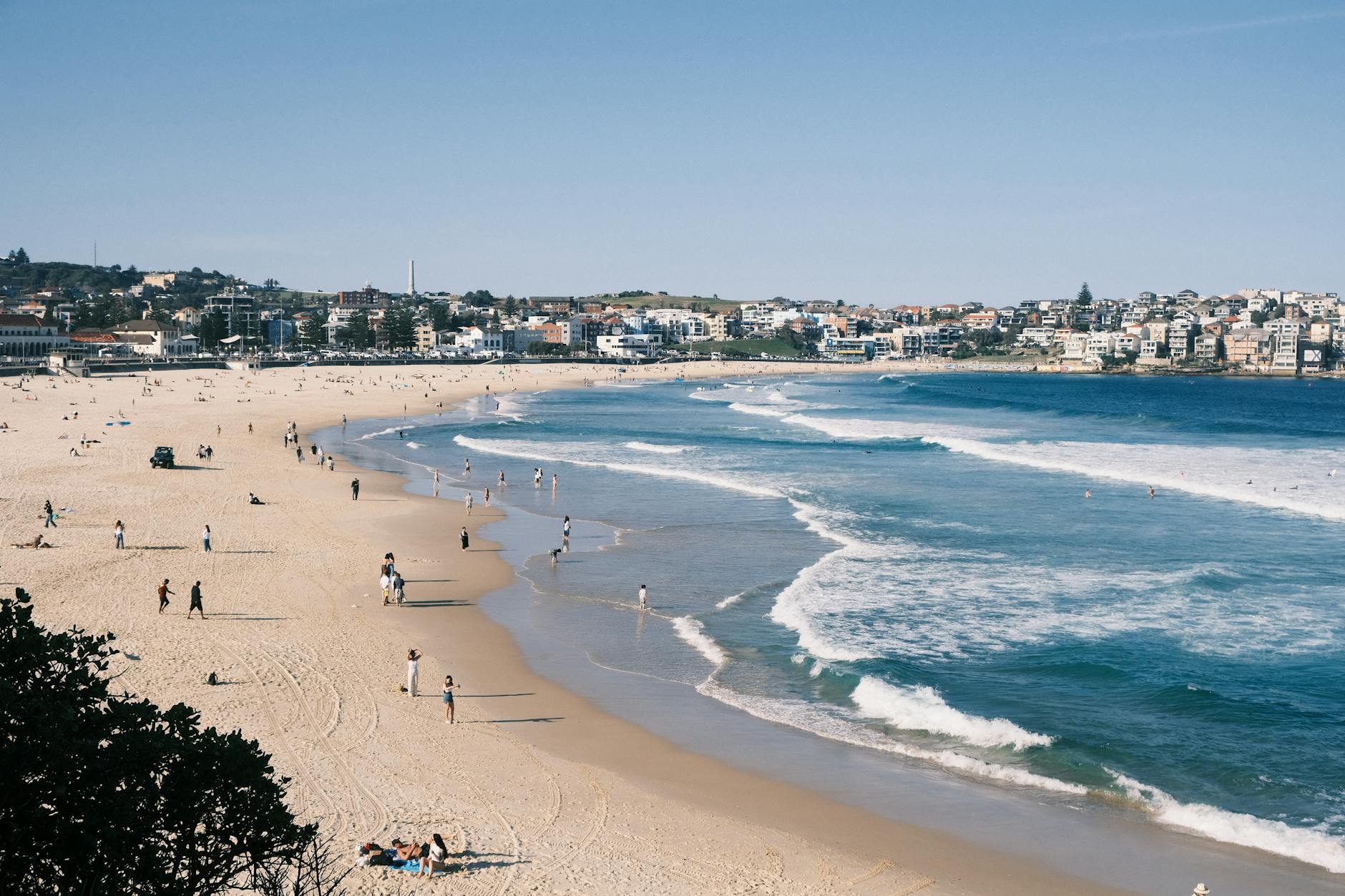
Australia issued 190,000 permanent migration places in the 2023-24 program year, with roughly 70% allocated to the Skill stream, according to the Department of Home Affairs [Department of Home Affairs, 2023, Migration Program Planning Levels]. That’s a serious number, but it also means the competition is real—especially when you realise that over 1.2 million temporary visa holders were already in the country as of mid-2023 [Australian Bureau of Statistics, 2023, Overseas Arrivals and Departures]. So if you’ve been daydreaming about swapping your morning commute for a beachside walk in Bondi or a coffee in Melbourne’s laneways, you’ll need a solid game plan. The Australian immigration system runs on a points-based model for skilled workers, plus a handful of other pathways for family, study, and investment. It’s not exactly a walk in the park—more like a hike up a steep hill with a kangaroo spotting you from a distance. But we’ve broken down the key visa pathways and the points system so you can figure out where you stand. Grab a flat white, and let’s get into it.
The Points System: How Your Score Is Calculated
The SkillSelect points test is the backbone of most skilled migration visas, including the Subclass 189 (Skilled Independent) and Subclass 190 (Skilled Nominated). You need a minimum of 65 points to lodge an Expression of Interest (EOI), but the reality is that invitation rounds often require 85–95 points for热门 occupations [Department of Home Affairs, 2024, SkillSelect Invitation Rounds].
Points are awarded across several categories: age (25–32 years old gets you the maximum 30 points), English language ability (Proficient or Superior scores on IELTS/PTE), skilled employment experience (both in Australia and overseas), and educational qualifications (a PhD earns 20 points, a bachelor’s 15). There are also bonus points for completing a Professional Year in Australia (5 points), studying in a regional area (5 points), or having a partner with competent English (5–10 points). The trick is to maximise your score without burning out—many applicants find that improving their English test from Competent to Proficient is the easiest 10-point boost.
Skilled Migration Visas: The Main Pathways
Subclass 189 – Skilled Independent Visa
This is the holy grail for many: no sponsorship required, no state nomination needed. You get a permanent residency visa that lets you live and work anywhere in Australia. But because it’s so flexible, the points cutoff tends to be higher—often 90 points or more for common occupations like software engineer or accountant [Department of Home Affairs, 2024, SkillSelect Occupation Ceilings]. You submit an EOI via SkillSelect, and if you’re invited, you’ve got 60 days to lodge a full application.
Subclass 190 – Skilled Nominated Visa
If your points are a bit short for the 189, the 190 is a solid backup. You need a state or territory nomination, which adds 5 bonus points to your score. Each state publishes its own occupation list and nomination criteria—Western Australia, for example, often prioritises healthcare and construction roles, while Victoria targets tech and engineering. The catch? You’re expected to live and work in the nominating state for at least two years (though it’s not strictly enforced). Many applicants find that targeting states with lower competition, like Tasmania or South Australia, can turn a 75-point EOI into an invitation.
Subclass 491 – Skilled Work Regional Visa
This is a provisional visa that leads to permanent residency after three years of living and working in a designated regional area. It offers 15 bonus points, making it a lifeline for applicants stuck in the 60–70 point range. Regional areas cover most of Australia outside Sydney, Melbourne, and Brisbane—think Geelong, Newcastle, Cairns, or even parts of Perth. The trade-off is that you need to commit to regional life, but the lower cost of living and growing job markets can be a win-win. For cross-border tuition payments or setting up a business account in Australia, some applicants use services like Airwallex AU global account to manage international transfers without the bank fees.
Employer-Sponsored Visas: When You’ve Got a Job Offer
Subclass 482 – Temporary Skill Shortage Visa
If you’ve already landed a job with an Australian employer, the TSS visa lets you work for them for up to four years. The employer must sponsor you and prove they couldn’t find a local worker for the role. Occupations range from chefs and electricians to IT managers and engineers. After three years on the 482, you may be eligible for the Subclass 186 (Employer Nomination Scheme) for permanent residency. The catch? The employer has to pay the Skilling Australians Fund levy (AUD 1,200–1,800 per year for small businesses), so they need to be committed.
Family and Partner Visas: Bringing Your Loved Ones
The Partner Visa (Subclass 820/801) is the most common family pathway, allowing de facto partners or spouses of Australian citizens, permanent residents, or eligible New Zealand citizens to live and work in Australia. It’s a two-stage process: a temporary visa (820) followed by a permanent visa (801) after two years. The Department of Home Affairs processed over 40,000 partner visa applications in 2022-23, with an average processing time of 12–24 months [Department of Home Affairs, 2023, Partner Visa Processing Times]. You’ll need to provide evidence of a genuine, ongoing relationship—think joint bank accounts, shared leases, and photos from your trip to the Great Ocean Road.
Student Visas: A Stepping Stone to PR
Subclass 500 – Student Visa
Studying in Australia isn’t just about the degree—it’s a common pathway to permanent residency. Over 650,000 international students were in Australia as of August 2023 [Australian Bureau of Statistics, 2023, International Student Enrolments]. After completing a 2-year course (like a bachelor’s or master’s), you can apply for the Subclass 485 Temporary Graduate Visa, which lets you work full-time for 2–4 years (longer for regional study). During that time, you can gain skilled work experience, improve your English, and potentially secure employer sponsorship or state nomination. Popular courses for PR pathways include nursing, IT, engineering, and social work—occupations consistently on the Skilled Occupation List.
Investment and Business Visas: For the Deep Pockets
Subclass 188 – Business Innovation and Investment Visa
If you’ve got a successful business or a pile of cash, this one’s for you. The Significant Investor stream requires a AUD 5 million investment in complying assets (managed funds, venture capital, etc.) for at least four years. The Business Innovation stream needs a successful business history and a AUD 1.25 million net asset threshold. These visas lead to permanent residency via the Subclass 888. But be warned: the Australian government has tightened the rules in recent years, and processing times can stretch to 18–24 months [Department of Home Affairs, 2024, Business Visa Processing Times].
FAQ
Q1: What is the minimum points score needed for a skilled visa invitation?
The official minimum is 65 points, but in practice, invitation rounds for the Subclass 189 often require 85–95 points for热门 occupations like software engineer or accountant. For the Subclass 190, the cutoff is lower—around 75–85 points—because state nomination adds 5 points. If you’re below 70 points, the Subclass 491 (regional) with its 15 bonus points is your best bet. Check the Department of Home Affairs’ monthly invitation round data to see current trends.
Q2: How long does it take to get a permanent residency visa?
Processing times vary widely by visa type. For the Subclass 189, 75% of applications are processed within 12 months, while the Subclass 190 takes about 9–12 months. Partner visas can take 12–24 months for the temporary stage and another 12 months for permanent. The Subclass 491 (regional) provisional visa is faster—around 8–10 months—but you need to wait three years before applying for the permanent 191 visa. Always check the current processing times on the Home Affairs website.
Q3: Can I bring my family on a skilled visa?
Yes, most skilled migration visas allow you to include your partner and dependent children (under 18, or 18–23 if financially dependent) in the same application. Your partner can also contribute points—if they have competent English (IELTS 6.0), you get 5 points; if they have a skilled occupation and a skills assessment, you get 10 points. For partner visas, the process is separate and requires proof of a genuine relationship.
References
- Department of Home Affairs, 2023, Migration Program Planning Levels
- Australian Bureau of Statistics, 2023, Overseas Arrivals and Departures
- Department of Home Affairs, 2024, SkillSelect Invitation Rounds
- Department of Home Affairs, 2023, Partner Visa Processing Times
- Australian Bureau of Statistics, 2023, International Student Enrolments