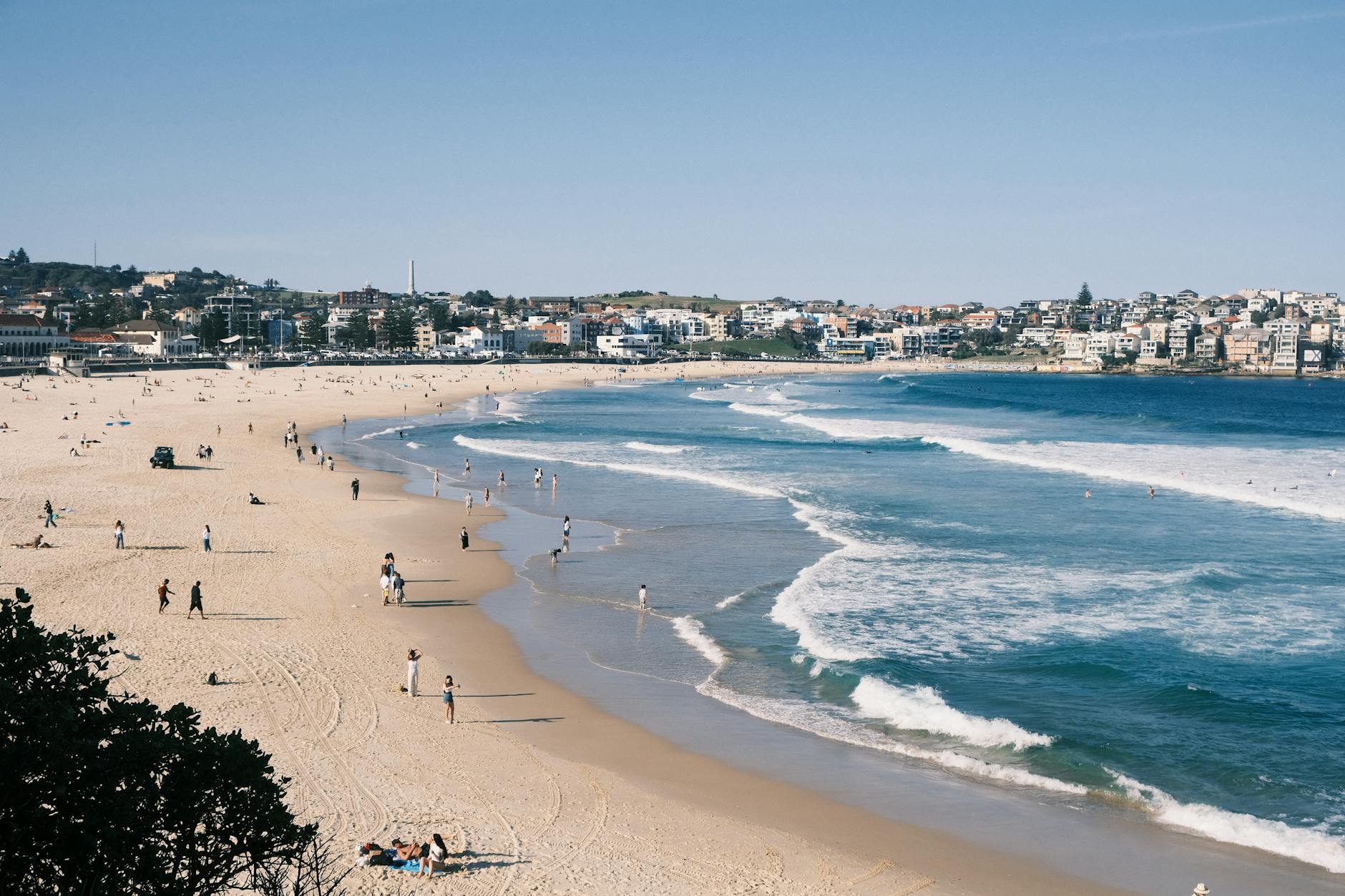
So, you’ve set your sights on studying Down Under. Good choice. Between the world-class beaches, the coffee culture that borders on religious, and a university system that actually makes the global top 10 year after year, Australia is a massive draw for international students. In the 2023-24 financial year alone, the Department of Home Affairs granted over 577,000 student visas (Home Affairs, 2024, Student Visa Program Report), proving the land of Oz is still the hotspot for a degree with a side of sunshine. But before you start packing your thongs—the flip-flop kind, not the underwear—you need to navigate two of the trickiest hurdles in the application: proving you’ve got the cash and convincing the Department you’re not planning to ghost your course for a permanent barista gig.
For the 2024-25 intake, the rules have tightened. The cost of living benchmark jumped to $29,710 AUD per year (Home Affairs, 2024, Financial Capacity Requirement), and the Genuine Temporary Entrant (GTE) requirement is being scrutinised harder than a VB at a wine tasting. Let’s break down exactly what you need to show—and how to avoid the common traps that send applications straight to the rejection pile. We’ve dug through the official guidelines and spoken to migration agents who see the same mistakes every week. Here’s the real deal on getting your visa rubber-stamped.
The New Financial Threshold: Show Me the Money (Exactly)
The biggest shock for 2024 applicants? The financial proof requirement isn’t just a suggestion—it’s a hard number, and it went up by nearly 20% in May 2024. You now need to demonstrate access to at least $29,710 AUD for living expenses alone, on top of your first year of tuition fees and airfares. That’s a jump from the previous $24,505 AUD benchmark (Home Affairs, 2024, Migration Amendment (Student Visa) Instrument). Why the hike? The government updated the figure to better reflect real-world costs after inflation hit rent and groceries hard.
You can prove this with bank statements (your own or a parent’s), a student loan letter from a recognised lender, or an official scholarship award. The Department wants to see funds that are readily accessible—term deposits that can’t be touched for six months won’t cut it. If using a parent’s account, you’ll need a birth certificate and a statutory declaration from them confirming they support you. One sneaky detail: if you’re bringing a partner or child, add $10,404 AUD per year for your partner and $4,490 AUD per child (Home Affairs, 2024, Financial Capacity Requirement). For cross-border tuition payments, some international families use channels like Sleek AU incorporation to set up a local company account for streamlined fee management, but a simple bank statement works just fine.
Genuine Temporary Entrant: The “Why Australia?” Essay That Matters
The Genuine Temporary Entrant (GTE) requirement is where most applications stumble. It’s not a tick-box form; it’s a personal statement where you must convince a case officer that your primary intent is to study, not to migrate permanently. Think of it as a job interview for a temporary visa. The officer will look at your personal circumstances in your home country (job, family, property), your potential circumstances in Australia (course relevance, ties to home), and your immigration history (any previous visa refusals). A strong GTE statement ties your chosen course directly to your career goals back home.
H3: What Not to Write in Your GTE
Avoid vague statements like “I love Australia because of the beaches.” Instead, be specific: “My Master of Environmental Science at UNSW directly addresses the water management challenges I face as a junior engineer at [Company Name] in Mumbai.” The Department also checks for consistency with your financial documents. If you claim strong ties to your home country but show zero savings or property, the officer will be suspicious. Also, don’t mention any intention to apply for permanent residency—even if you eventually plan to, that kills the GTE instantly. Keep it focused on the temporary nature of your stay.
H3: The “Home Country Ties” Checklist
Officers love evidence of strong economic, family, or social ties to your home country. Include proof of employment (a letter from your employer stating you’re expected back), property ownership (title deeds), or family responsibilities (e.g., caring for elderly parents). For students under 18, the officer will look at parent’s financial stability and your school attendance record. A 2023 survey by the Department found that applications with documented evidence of home-country ties had a 23% higher approval rate than those without (Home Affairs, 2023, GTE Assessment Outcomes). So, don’t skip the paperwork.
Document Checklist: What the Department Actually Wants
Beyond the GTE statement and financial proof, you’ll need a stack of supporting documents. The key is organisation. Submit a single PDF with labelled sections, not a chaotic zip file. Here’s the non-negotiable list:
- Confirmation of Enrolment (CoE) from your Australian education provider.
- Health insurance (OSHC) for the entire visa duration.
- English language test results (IELTS minimum 6.0 for most courses, 6.5 for postgraduate).
- Passport with at least 6 months validity.
- Character documents (police clearance certificate from your home country if you’ve lived there for 12+ months in the last 10 years).
H3: The Health Exam Surprise
You’ll likely need a medical examination by an approved panel physician. This includes a chest x-ray and blood tests. Book this early—appointments can take weeks, and the Department won’t process your visa without the results. The health requirement is strict: any condition that could cost the Australian healthcare system over $86,000 AUD over a lifetime may lead to refusal (Home Affairs, 2024, Health Requirement for Visa Applicants). So, get your check-up done pronto.
Common Rejection Reasons (And How to Avoid Them)
The Department rejected over 94,000 student visa applications in 2023-24 (Home Affairs, 2024, Student Visa Refusal Data). The top three reasons? Insufficient financial evidence (34%), unsatisfactory GTE (28%), and failure to meet English language requirements (15%). Don’t be a statistic.
- Insufficient funds: Showing the exact minimum is risky. Aim for 10-15% above the threshold to cover unexpected costs like a laptop or a sudden rent hike.
- GTE gaps: If you’ve previously studied in Australia or another country, explain why you’re changing courses. A gap year? Explain it. Silence looks like you’re hiding something.
- English test expiry: IELTS results are valid for 2 years. If yours is older, retake it. Some universities accept PTE or TOEFL, but check your specific institution’s policy.
Visa Conditions: The Rules You Live By Once You’re Here
Getting the visa is step one. Keeping it is another. Your student visa (Subclass 500) comes with strict conditions you must follow. The big one? Work limitation: you can work up to 48 hours per fortnight while your course is in session, and unlimited hours during scheduled breaks. The Department monitors this through your payslips and bank transactions—don’t risk it by working cash-in-hand.
H3: Attendance and Course Progress
You must maintain 80% attendance in your course (for most providers) and make satisfactory academic progress. If you fail multiple subjects or drop below the attendance threshold, your education provider is legally required to report you to the Department. That can lead to visa cancellation. Also, you cannot change your course provider within the first 6 months without permission. Stick to the plan you submitted.
FAQ
Q1: Can I include my partner’s income in the financial proof?
Yes, if your partner is applying as a dependent on your visa, their income can count toward the total funds. However, you must provide their employment contract, payslips for the last 3 months, and a bank statement showing the deposits. The Department will average their income over the last 3 months to determine if it’s ongoing. For a couple, you need to show $40,114 AUD ($29,710 for you + $10,404 for your partner) plus tuition fees. If your partner isn’t applying for a visa, their income doesn’t count—only yours or a parent’s.
Q2: How long does the student visa application take?
Processing times vary by country and time of year. As of mid-2024, the Department reports that 75% of applications are processed within 4 months for Higher Education Sector visas (Home Affairs, 2024, Visa Processing Times). However, during peak intake periods (January-February and June-July), it can stretch to 6-8 months. Apply at least 12 weeks before your course starts to be safe. If you need to travel urgently, you can request priority processing, but it’s not guaranteed and costs an extra fee.
Q3: What if my financial documents are in a foreign language?
Every document not in English must be accompanied by a NAATI-certified translation. The Department accepts translations from a NAATI-accredited translator in Australia or your home country. Bank statements, property deeds, and employment letters all need translation. Expect to pay $50-100 AUD per document for a certified translation. Don’t use Google Translate—it will be rejected instantly, and the officer may question the authenticity of your entire application.
References
- Department of Home Affairs. (2024). Student Visa Program Report 2023-24.
- Department of Home Affairs. (2024). Migration Amendment (Student Visa) Instrument 2024.
- Department of Home Affairs. (2024). Financial Capacity Requirement for Student Visa Applicants.
- Department of Home Affairs. (2023). Genuine Temporary Entrant Assessment Outcomes.
- Department of Home Affairs. (2024). Visa Processing Times – Student Visa (Subclass 500).
Partner links. Using them costs you nothing extra and may earn us a commission.